Featuring over 350 tried and tested recipes that can be prepared at home. From comfort food to restaurant style. Plus 110+ articles on Kitchen and Cooking Tips, Restaurant Reviews and more.
Showing posts with label Chingri Malai Curry (Shrimp Curry with Coconut Milk). Show all posts

Wednesday, 28 August 2019

Bhapa Ilish


If you love Ilish then it wont take anything more to impress you. Just a bowl of Bhapa Ilish with steamed rice and you will be singing the cook’s praises for a long time. For a Bengali, food is an integral part of life and fish dishes go right at the top of the pyramid (pyramid of all the favorite food items listed). Personally I was a bit surprised to learn that it doesn’t take much to prepare this heavenly curry. The steaks of Ilish are dipped in a paste of yogurt, salt, turmeric, mustard powder and oil, then cooked in the microwave for 10-15 minutes and that’s it! 

I think every cuisine and culture has something which is so special that if you have to name one dish from your cuisine you will no doubt mention it. For Bengalis it is Bhapa Ilish. If you are familiar with the French À La Russe service style, then this will seem very interesting to you that Bengali cuisine is very much like that where food is served in courses rather than all at once. I think it is because of the myriad of dishes both savory and sweet. Well, because we have so many dishes to flaunt and so much to eat, serving a multi course menu makes more sense. 

As for me, I am a through and through Bengali in serving my dishes. I love to cook multiple courses for a single lunch or dinner. Of course, for just two people it doesn’t make much sense but if we have guests/ friends coming over, I love serving meals in the À La Russe style. 

An expert (like Debarshi’s mom) would do the preparations and keep everything ready then start cooking the Ilish right when everyone is sitting down for lunch. It was actually quite exciting. We all started with our first course (Saag Bhaja, ghee and rice), then the second course (Chochori, Dal and rice) when the microwave started beeping announcing that Ilish was ready! Then his mom brought the bake ware on the table, took off the cling wrap and served hot Ilish right on our plates. It was an absolutely ecstatic experience for me. Me! Who takes half an hour to finish a piece of Ilish. I enjoyed the show thoroughly. And the fish was simply marvelous. 

Now if you don’t like extra fishy smell or excessive bones then you may find it a little difficult to enjoy Ilish. However, I will say, take your time and sort the bones properly. So what if I have to sit for another half an hour on the dining table alone and sort the bones out? I still enjoyed the fish very much.

Make sure you are cleaning the fish very well so that all the scales and blood clears out. Also, do not use any oil other than mustard to prepare this because it just wont bring that authentic flavor in the fish. Also make sure you are preparing just the number of pieces you will be able to consume in that one meal. Keeping the leftover in the fridge may affect the flavor. 

Try this dish then post how it turned out. Got any suggestions or ideas? Post them away!


Ingredients:
  • Ilish – 7 big/ medium pieces 
  • Salt – about 1 teaspoon
  • Turmeric Powder – 1 teaspoon
  • Green Chili - 6-7 slit
  • Mustard Powder – 4 teaspoons
  • Mustard Oil – 1 teaspoon + 2-3 tablespoons
  • Coconut Paste – 1/3 cup
  • Yogurt – ½ cup


Tip: For the Coconut paste, you can use shredded coconut. Allow it to soak in ¼ cup warm water for 5-10 minutes then run it in Nutri bullet to make a smooth paste.

Directions:
  • Wash the fish steaks. Make sure the fish is clean, there are no scales or blood on it.
  • Allow it to drain the water then season with Salt (about ½ teaspoon) and Turmeric powder (about ½ teaspoon).
  • Mix the Mustard Powder, Mustard Oil (1 teaspoon), Turmeric Powder (½ teaspoon), Green Chili and make a paste with ½ cup of Water. 
  • Mix the Yogurt with ¼ cup of water.
  • In a microwave safe baking tray, add the whisked yogurt and water mix, 1/3 cup of coconut paste along with 2-3 tablespoons of Mustard Oil. Mix everything together. Add the mustard paste as well and mix, taste to adjust Salt.
  • Cover the baking tray with a cling wrap. Poke some holes in the wrap carefully using a tooth pick.
  • Microwave on high for 10 minutes.
  • Let it sit in the microwave for 5 minutes.
  • Check if the fish has cooked through by pressing it with a finger or spoon. Cooked fish will press down easily.
  • Cook for 2 more minutes then serve hot with steamed rice.


Love Bengali fish recipes? Try these as well:

Monday, 15 July 2019

Shorshe Diye Bata Mach (Bengali recipe: Fish in Mustard Gravy)


I am a Bengali who has recently acquired the taste of fish. And I am a cook who has recently started cooking fish. In our home, fish and mutton used to be Debarshi’s specialty. However, now I have also started trying them on my own because sometimes it’s great to surprise Debarshi with his favorite curries. If you cannot connect to this emotion, just think about your favorite dish – Sushi, Hamburger, Chinese (or whatever it is). Now think, you have no idea coming home that you will be served your favorite dish for dinner! Isn’t it amazing when that happens! So yeah! I am on an adventure only this time it involves fish.

One thing you have to know is, there are many different varieties of fish in the market and they are all cooked in various ways. Frying the fish alone is a daring task because of the long lingering fishy smell. So make sure to switch on the central air or open your windows/ doors so that the fishy smell can get out.


The few fish recipes I have on my blog are cooked with either shrimp or salmon. Today we are going to discuss a totally different type of fish – Bata Mach (Bata = Labeo Bata and Mach = fish). This is a small game fish, quite popular for its taste. This fish is found throughout India (West Bengal, Odisha, Tripura etc.) and Bangladesh in ponds, rivers and rivulets. In fact, it is one of the few fishes which are found in my hometown – Allahabad. I am sure growing up; I must have been offered a bowl of fried Bata Mach dipped in a delicious mustard gravy. However, I have always had a low tolerance of mustard’s rich flavor. Even now, I take very less gravy and mix it with a lot of rice to sweeten the overall taste. However, when Debarshi’s mom cooked this dish, it was so awesome that I asked her to prepare it again so that I can take detailed notes.


In India we have quite a few options to easily make/buy mustard paste, however, here in (USA) smaller cities, you may not always find a lot of options. I don’t prefer buying groceries from amazon especially when it comes to spices. So, I try to find readymade mustard powder at my local Indian stores. The alternative is, to use seeds. Debarshi used to make a paste of mustard seeds and water using our Nutri bullet (extractor blade). He would then strain the paste and mix other ingredients in it. This time the extractor blade broke (well, it was about time) so I used the milling blade to grind the mustard seeds to a fine powder and then soaked it in water. This trick turned out so much better and this is what I will recommend.

Making a fish curry is a daunting task even if you have all the gadgets. I want to salute our mothers and grand mothers who used to do so much extra labor to cook these authentic dishes. A few decades back when food processors, Nutri bullet, food chopper, mixer and grinders weren’t as common as they are today, everything was done manually. I am sure everyone of my generation remembers a Shil Nora stacked in the corner of the kitchen. I am just thankful to science and all the advancement in technology, otherwise a lazy person like me would never have dared to step in the kitchen and cook a fish curry!

So, give this a try sometime and then post in the comments how it turned out. You can also post on my Instagram #lifewithoutalu with your photos and comments.


Ingredients:
  • Bata Fish – 1 pack (24)
  • Mustard Paste - 3 tablespoons
  • Salt – to taste (about 1 teaspoon)
  • Turmeric Powder – 1 teaspoon 
  • Mustard Oil – 3 tablespoons
  • Green chili -3-4
  • Garlic – 3-4
  • Tomato – 1 medium
  • Cilantro – a handful, washed and chopped


Tips:
  • Use only mustard oil to cook this otherwise it wont develop the same authentic flavor.
  • You can use readymade mustard powder/ paste or if you have seeds, grind them to a fine powder in your grinder/ Nutri bullet and soak it in water. Strain before using to discard the seed skins.


Directions:
  • Check to see if the fish pieces are thoroughly clean. 
  • Season the fish with a little Salt (¼ teaspoon) and Turmeric Powder (about ½ teaspoon) and keep it aside for an hour.

  • Next we need the Mustard paste, you can use readymade mustard powder or grind the seeds in the grinder then soak it in water to make the paste. Mix ¼ teaspoon each of Salt and Turmeric powder along with a teaspoon of Mustard Oil. Let it soak.
  • Make a paste of Green chili, Garlic and Tomato.
  • Now, take a big non-stick pan and heat it over medium high heat.
  • Add 2 tablespoons of Mustard oil in it. When it begins to smoke, reduce the heat to medium low so that it cools off (this is done to remove the pungent taste and smell of the Mustard Oil).
  • Increase the heat to medium and carefully add a few fish pieces. Do not over crowd the skillet and fry in a single layer.


Tips: 
  • Make sure the oil is properly heated before adding the fish. This will not only remove the pungent flavor and aroma from the oil but also prevent the fish from sticking on the pan. 
  • If the oil jumps too much add a pinch of Turmeric powder in the oil and mix it properly.
  • Allow the fish to fry up before turning it. Do not disturb the fish before one side is fully done otherwise it will stick on the pan.
  • Use a splatter screen to cover the skillet. It blocks the oil from sputtering all over the gas oven. (A splatter screen is a fine mesh with a handle and you can see through the mesh and fry the fish). 
  • Turn on the central air and vents.


  • When the fish looks golden and fried, transfer it to a plate and keep it aside. 
  • Now reduce the heat to low and add the Green chili, Garlic and Tomato paste in it.
  • Increase the heat to medium and fry the paste well.


  • When the paste looks fried and reddish in color (and the oil starts to separate), add the mustard paste. Mix well.
  • Reduce the heat to medium low and fry the mixture till oil separates.
  • Now adjust the Salt.
  • Add about 1 ½ cups of Water and bring to a boil.
  • Add the fried fish, reduce the heat to low and cook till the gravy thickens.
  • Sprinkle chopped Cilantro and serve with hot steamed rice.


Love Bengali food? Try these dishes as well:

Wednesday, 10 July 2019

Kacha Aamer Ombol (Bengali chutney with Unripe Mango)


When I mention the word ‘Chutney’ what comes in your mind? Are you thinking of the readymade jars sold in Asian aisle of the grocery shops?  Then you will be surprised to know that in India, chutneys are always prepared from scratch just like every other item on the lunch/ dinner menu. We Bengalis, always serve the chutneys as a final course of the meal which means it is not usually consumed as a dip (except a few chutneys like cilantro/ mint which are always served as dips to accompany the savory snacks). 

Personally, I have never been too fond of chutney or Ombol. I never even prepare it myself for my regular everyday lunch. Raita on the other hand, is one of my favorites. Still, I am glad that Debarshi’s mom prepared this delicious Ombol while she was visiting us. I may not prepare it frequently (because Debarshi doesn’t care much for it) but it is always good to have a few extra recipes up your sleeve. In my in-law’s family, however, it is a whole different story. They love Ombol. Ending the meal with a little Ombol and rice makes it perfect for them. So, all in all I am glad to learn this recipe.

Soup or Chutney?
Ombol has been listed on several food blogs as a soup. However, since I can never consume this on its own like a soup, I have decided to list this under chutney. Also, just like chutney (or as we Bengalis call it – Chatney), Ombol is also served as a final course of lunch. Although like chutney, Ombol is not thick. It is also healthier because of the less amount of sugar added in it. 

What is Ombol?
Ombol is prepared with unripe mangoes. This is actually a very popular dish in most Bengali families. As I mentioned above, it is served as the final course of lunch. It has a tangy, sweet taste. For those who love unripe mangoes, this makes the satisfying and refreshing part of the entire meal. 

Why Unripe mangoes?
While most of us love the ripe sweet mangoes, unripe mangoes have several health benefits. In Northern India, Aam ka Pana (a mango drink prepared with unripe mangoes) is very popular during the summer months. I think this is the biggest health benefit we can get from unripe mangoes – their ability to protect us from the heat. When we consume unripe mangoes with salt, it helps to prevent the excessive loss of water from the body. That is why it is always recommended to drink a glass of Aam ka Pana before going out on a sunny afternoon. While protecting from the high temperature, it also helps to quench our thirst. Since this Ombol is prepared with unripe mangoes it helps to maintain a healthy body. 

What does it taste like?
Unripe mango is tangy but when we add just a little sweet and salt in it, it makes the perfect appetizing Ombol. Since in India, we don’t get mangoes (or the quality of mangoes which we get in summer) throughout the year, this Ombol makes a perfect seasonal treat. For those who love unripe mango, the name is enough to tickle their taste buds. The Mustard Seeds adds a delicious taste and aroma in it and the sweet and sour flavor is unlike anything you have ever had before.

With all the junk fast foods in our life sometimes it is good to look back and enjoy the simple dishes. I know this is a simple recipe, however, it does connect us with our loved ones. Let’s not forget the authentic, sweet and sour things of our life and culture which makes us – Us. If this is not enough to convince you to try this recipe, think of it as something exotic. You will only know how great it tastes if you try it yourself.


Ingredients:
  • Unripe Green Mangoes – 4, small
  • Red Pepper Pod – 1
  • Mustard Oil – 1 teaspoon
  • Mustard Seeds – ½ teaspoon
  • Salt – a pinch
  • Water – 2 cups
  • Sugar – ½ cup (or as per taste)

Directions:
  • Start by cutting and de-seeding the mangoes. Wash and drain them.

Tip: To de-seed - cut in half lengthwise then cut again to remove the seed, do not cook with the seed otherwise it will taste bitter. 

  • My mother-in law used a pressure cooker to cook this. So, heat a small pressure cooker on medium high heat.
  • Add the mustard oil in it. It will smoke quickly, add the Red pepper pods and mustard seeds in it.
  • When the seeds crackle, add the mangoes.
  • Add the salt, fry lightly.
  • Add the water and bring to a boil.
  • Add the sugar and cover the lid and whistle. 
  • Let it cook for 2 whistles. 
  • Turn off the heat and remove the cooker to let it cool down.
  • Once the pressure drops completely and the lid opens, transfer the Ombol to a serving bowl.
  • Ombol is ready! Serve it as a final course of your lunch.


Serve this delicious Ombol with steamed rice and:

Wednesday, 19 June 2019

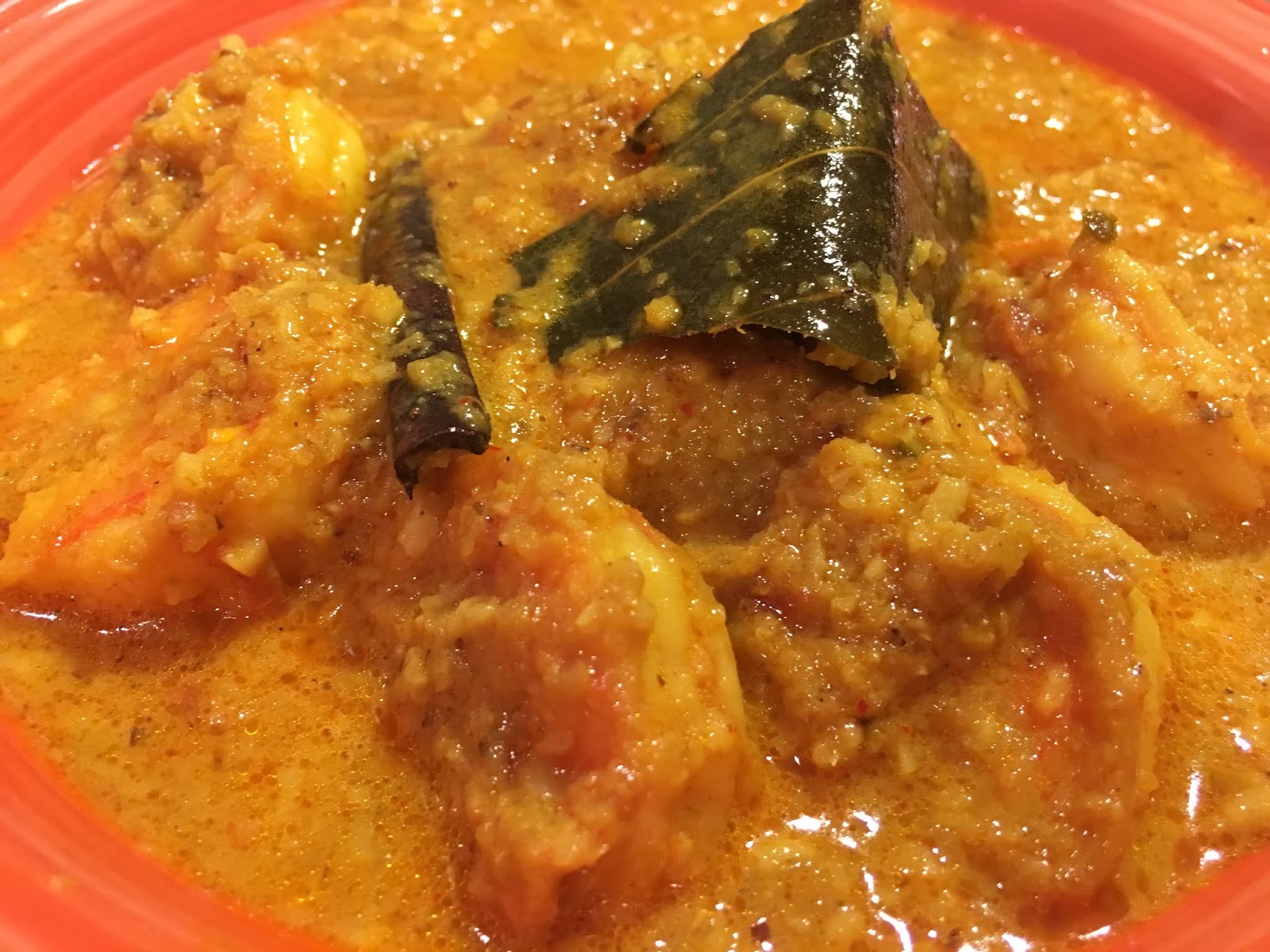
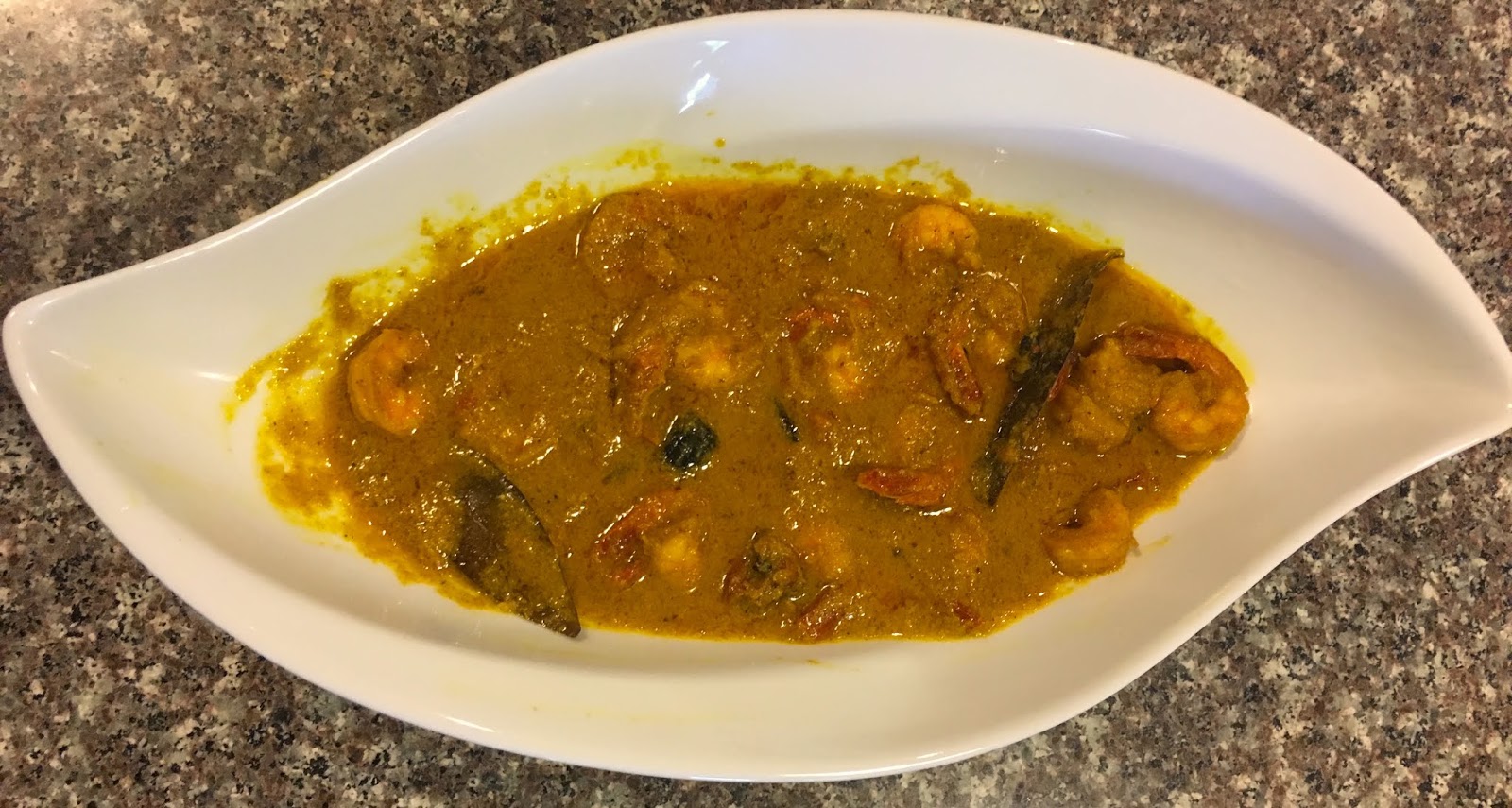
Chingri Malai Curry (Shrimp Curry with Coconut Milk)


My favorite time pass is going to a library or a book store. I love looking around at the thousands of books. To think so many people have read them and shared them. Every book tells a story and there are so many. I finished my Sherlock Holmes volume last week and now I am reading a book by Stephanie Saldana. It's called - A Country Between. It is about a couple who start their married life in Jerusalem. Between war and a baby boy, the author continues living in that place because that is what makes her feel like home. And isn’t that what we are all looking for? A place where we feel we are ourselves. This is a serious book and as much as I like reading it, I prefer taking breaks and reading something else. Today as I was walking around in the aisles, I instinctively turned towards the food section. The first book which caught my attention had a beautiful picture of Shrimp Scampi Pasta on the cover and I thought, I should complete and publish that article on Shrimp Malai Curry which has been lying in my drafts for the last several days. 

As a Bengali, I am quite used to having seafood. However, when to comes to preparing it, I am still a novice. I am not fond of the smell while cooking it and especially when it lingers long after. I keep the vent on and the scented candles burning but fish will always have a fishy smell. Plus, it takes me ages to clean a piece of fish. I am lucky that Debarshi is always there to do these chores for me. However, it also means that I will never be able to surprise him by cooking a fish curry on my own.

But there is something I can prepare on my own, which cooks easily and quickly and comes pre-cleaned. I am talking about – Shrimp and that is why, I love Shrimp! I love adding it in stir-fries, pastas and curries. I usually get a frozen bag of shrimp and thaw a few pieces whenever I want. With the convenience of having peeled and deveined shrimp at hand, making dishes with it is an easy job. So, when Debarshi’s mom asked if she could make this Malai curry I was super happy. Now before we move on to the recipe, let’s discuss it first.


Chingri is the Bengali name for shrimp. In this recipe, we will be using some commonly used whole spices like Bay leaf, Cinnamon, Cloves, Green Cardamom, Mace and Red pepper pods. The special creamy taste and delicate flavors will be developed by using coconut milk and heavy cream. This dish will have a thick curry making it ideal to serve for special occasions. I prepared this Malai curry to celebrate Jamai Shosthi this year (This is an auspicious day to celebrate the son-in law of the family. On this day, the mother -in law prepares different types of authentic meals for their son-in law.  The day is celebrated within the family in a grand way. The son-in law is given gifts and served authentic foods to make him feel welcome and special to the family. Since we are living away from our parents, I make sure to fulfil my mom’s duties every year by preparing something special for Debarshi).


Shrimp Malai curry is quite a traditional and popular Bengali dish. Although I have just learned the recipe, I have had it several times during our Bengali get-together parties. This delicious aromatic curry goes best with steamed rice so I wont suggest you to serve this with anything else.


Strangely I was of the impression that preparing this curry is a whole lot of work. Well, it isn’t! You just have to follow the steps as they are, because those directions develop all those amazing flavors.


I think today with readymade coconut milk/ pulp and food processors our life has become so easy. A couple decades back when there were no such gadgets and canned foods weren’t readily available, everything was done by manual labor. Our moms and grand moms used to do such much extra work! Hats off to you ladies and lots of thanks to you for preparing these delicious labor intensive meals for all those years.


Make sure to get the peeled and deveined shrimp from the store. Otherwise if you are not an expert in cleaning (like me) then that will unnecessary add a lot of work.


Ingredients:
  • Shrimp -22, jumbo, peeled and deveined (if frozen thaw them first)
  • Salt – to taste (½ teaspoon for curry plus ¼ teaspoon for seasoning)
  • Turmeric – 1 teaspoon for curry + ¼ teaspoon for seasoning
  • Mustard oil – 2 tablespoons
  • Bay leaf – 4, small
  • Cinnamon – ½, small stick
  • Cloves – 4
  • Green cardamom – 4
  • Mace – 2 blades
  • Red pepper pods – 2
  • Onion – ½
  • Ginger – 1 inch
  • Green Chili – 3-4
  • Garlic – 3 cloves
  • Canola oil – 2 tablespoons
  • Tomatoes – ¼ cup, diced or pureed
  • Red Chili Powder – ½ teaspoon
  • Sugar – ½ tablespoon + ½ teaspoon (for later – optional)
  • Heavy Cream – 4 tablespoons
  • Coconut – 1 cup milk or ½ cup coconut pulp
  • Nutmeg – ¼ teaspoon
  • Ghee – 1 teaspoon
  • Garam Masala – ¼ teaspoon


Tip: Got coconut flakes? No problem. Make a paste with ½ cup milk and use in the recipe.

Preparation: Make a paste of Onion, Ginger, Green Chili and Garlic.


Directions:
  • Season the shrimp with ¼ teaspoon each of turmeric powder and salt.
  • Heat a non-stick pan over high heat.
  • Add the Mustard oil in it. When it starts smoking, reduce the heat to medium high and add the shrimp in it one by one. It should be in a single layer.
  • Fry till the shrimp turns light pink in color.


Tips:
  • If the oil jumps, add a little turmeric powder in it and stir to mix.
  • If you are using Colossal shrimp (which we Bengalis call Golda Chingri), make sure to stick a toothpick or skewer across the head and tail to straighten the pieces while frying.
  • Use a non-stick pan to avoid any sticking.


  • Reduce the heat to low. Add 2 tablespoons of the Onion, Ginger, Green Chili and Garlic paste (we made earlier) in the pan.
  • Fry the paste with the shrimp and mix it well.
  • After 2-3 minutes add ½ cup of water in it. Cover and let it cook for 5 minutes.
  • Transfer the shrimp on a plate and transfer the spiced stock in a different bowl. Keep them aside.


  • Next let’s make the curry. Use a clean pan/ pot for this step or clean the one you are using right now with water and a paper towel.
  • Heat it on medium heat.
  • Add the canola oil.
  • Add the whole spices (Bay leaf, Cinnamon, Cloves, Green cardamom, Mace and 
  • Red pepper pods) in it.
  • Add the rest of Onion, Ginger, Green Chili and Garlic paste with Salt, Turmeric, Tomatoes, Red Chili Powder and Sugar.
  • Fry for a few minutes, when the mixture looks dry add the reserved stock.
  • Increase the heat to medium high.
  • Add the heavy cream. Mix together.
  • Reduce the heat to low. Cover and cook for about 20 minutes.
  • Add the coconut milk/ pulp. Cover and Cook for 5 minutes.
  • Add the shrimp. Stir to mix.
  • Grate the nutmeg.
  • Add the Ghee, Garam Masala and Sugar (optional). Mix together. Cover and Cook for 5 minutes.

Chingri (Shrimp) Malai Curry is ready! Serve with Basmati rice and enjoy!


Some more recipes with Shrimp:

Recommended Reading: