Featuring over 350 tried and tested recipes that can be prepared at home. From comfort food to restaurant style. Plus 110+ articles on Kitchen and Cooking Tips, Restaurant Reviews and more.
Showing posts with label Chochchori (Bengali style mixed vegetables). Show all posts

Wednesday, 24 July 2019

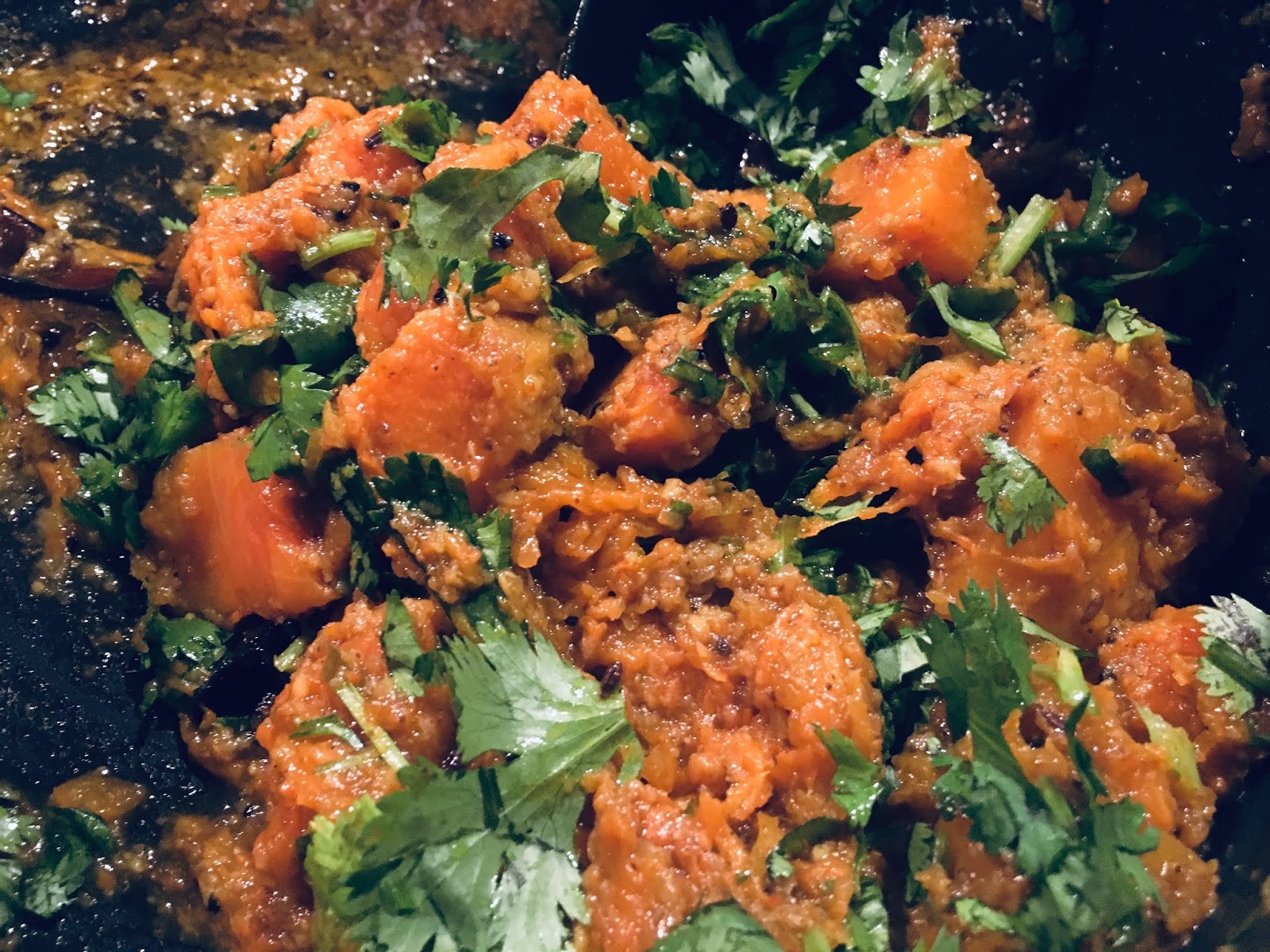
Achari Kaddu (Spiced stir-fried Pumpkin)


The word Pumpkin originated from the greek word Pepon which means large melon. Let me share a fun fact with you: If someone asks you whether Pumpkin is a fruit or vegetable, I would suggest simply saying, “Yes”. Why? Because a pumpkin qualifies for both! Webster's Dictionary defines Pumpkin as: A large, round, orange-yellow, edible fruit with many seeds. However, it is widely used for cooking and baking treating it like a vegetable. Pumpkin is like tomatoes, beans and green peppers. These are all fruits but since they are not so sweet, they are popularly called vegetables.

Here in U.S, pumpkin is one of the most popular crops. It is widely used in fall, starting with the pumpkin carving around Halloween to making pumpkin pie, soups and purees for thanksgiving dinner. Although I am yet to make a pumpkin pie, I did help Debarshi a couple of times to carve pumpkins for Jack-o’-lanterns.

It will also be interesting to note here that Pumpkin is loaded with numerous health benefits:
  • It is high in vitamin A – which helps promote sharp vision and boasts your immune system.
  • Pumpkin is high in minerals and low in calories (canned pumpkin is nearly 90% water so it will keep you hydrated and full with lesser calories).
  • It is rich in antioxidants.
  • Pumpkin is also a good source of fiber which helps to keep the appetite in check. In fact, in a recent WebMD article, I read that one cup of canned pumpkin contains 7 grams of fiber which is lot more than what we get from 2 slices of whole grain bread. Something to think about, right!
  • Unlike potatoes or corn which are high in carbs, pumpkin contains comparatively lower carbs (lower amounts of sugar and starch) and can be consumed on Keto (low carb high fat) diet. However, you should watch for the portion size because it does contain some carb. As you know Debarshi and I keep doing low carb diet on and off. Pumpkin is my all time favorite option even on Keto diet and I use it to make Kumror torkari or Chochchori. When not on keto, I can just deep fry it and enjoy it with rice and dal or make a delicious lentil soup (Sambar).
  • Pumpkin seeds are full of protein, magnesium, copper, and zinc. Remember, the Pumpkin seeds are known as Pepitas. They are edible and make a delicious snack. I love adding them in salads and oatmeal. A handful of Pepitas with dried cranberry makes a delightful topping and goes great with anything.


Plus, it is really easy to include pumpkin in your diet as it can easily be roasted, pureed or baked. I always prefer to cook savory pumpkin stir-fries without potatoes because that cuts down the carbs even further.

Canned or Fresh Pumpkin:
Although opening a can is way easier than cutting and peeling a fresh pumpkin, I prefer to use fresh ingredients in my recipes. Plus, my recipes involve cutting the pumpkin into cubes where as canned pumpkin is always pureed. However, if you are making pumpkin pie, using canned/ fresh wouldn’t make much of a difference. In fact, an article from Mayo clinic says:
  • Both fresh pumpkin and canned pumpkin are packed with nutrients, such as potassium, vitamin A and iron. 
  • Canned pumpkin without salt is a healthy alternative.


However, you should know that Canned pumpkin pie mix usually contains added sugar and is therefore higher in calories than regular canned pumpkin.

So, I guess it would depend on the recipe you are cooking/ baking. Personally I recommend using fresh produce.

Wow! All this interesting information almost made me forget that today I am running a fever. There is nothing to worry, I just got a bit carried away with my work out schedule. Turns out, if you don’t workout everyday you get so unfit that after every rigorous workout, your body starts to ache really badly. I still kept pushing myself up to the extent where I got fever due to extreme fatigue. So, today as I am lying on the bed, doing nothing, I decided to share this delicious vegetarian recipe.

I stumbled on this recipe a few days back. This is indeed a delicious medley of spices and pumpkin. It’s a dry stir-fry and can be served with roti/ Luchi/ Namkeen Puri or Plain Paratha. Try it! This tastes every bit as delicious as it looks. I left the pumpkin for a few extra days in the fridge and it got a bit over-ripe (hence the mashed pieces in the photo). I am sure this dish will have a better texture with a fresh bought pumpkin.

As always I have tried to provide a detailed explanation of the steps so that even the novice cooks can easily prepare it. I was a bit skeptical while trying this recipe because it has Panch Fhoran, Asafoetida (which are used in the vegetarian dishes only) with garlic and garam masala. However, this turned out to be amazingly delicious.

So, give this a try sometime and then post in the comments how it turned out. You can also post on my Instagram #lifewithoutalu with your photos and comments.


Ingredients:
  • Red Pumpkin - half, peeled, washed and cut into 1 inch cubes
  • Ginger – 1 inch, finely chopped
  • Garlic - 2 large cloves, finely chopped
  • Panch Fhoron - 1 teaspoon
  • Hing (Asafoetida) - ¼ teaspoon
  • Green Chili - 2, slit in half
  • Red Chili Powder – ¼ teaspoon
  • Amchur (Dry Mango Powder) - 1 teaspoon
  • Turmeric Powder – ½ teaspoon 
  • Garam Masala – ¼ teaspoon
  • Canola Oil - 2 Tablespoons 
  • Salt – to taste (about ½ teaspoon)
  • Fresh Cilantro - a handful, washed and chopped

Directions:
  • Heat a wok/ cooking pot over medium-high heat.
  • Add Oil in it.
  • Temper the Oil with Panch Fhoron and Hing. 
  • When the seeds sizzle, add the Ginger, Green Chili and Garlic in it. 
  • Reduce the heat to medium and add the pumpkin. Mix well. Fry, stirring carefully.
  • Once the pumpkin looks fried, start adding the spices (Red Chili Powder, Amchur,  
  • Turmeric Powder, Garam Masala and Salt). Stir to mix. 
  • Lower the heat to simmer and cover the wok. Let it cook for 5-10 minutes till the Pumpkin is thoroughly cooked.
  • Garnish with the Cilantro.
  • Serve hot with Luchi or Paratha.


Love Pumpkin? Try these recipes as well:

Wednesday, 25 January 2017

Moonger Daler Khichuri (One Pot dish with rice, lentils and vegetables)


I love cooking complex dishes at home but comfort food is my specialty. You see, you cannot eat those heavy butter dipped curries or biryani’s everyday, sooner or later you will get bored and feel like eating something which is healthy and light. It’s always good to know some of these easy to cook, one pot recipes which you can rely on. If you have a pressure cooker perfect! Because this porridge like dish gets cooked in just 3 whistles in a pressure cooker. Don’t have a cooker? No worries, plan this one pot dish a little early and it will be ready in time for dinner.


Today’s recipe is Khichuri which is prepared with rice, lentils and vegetables. Its aroma comes from a variety of whole spices which are used in its preparation like cloves, cardamoms and bay leaves but I think it’s the addition of ghee (clarified butter) which makes this simple dish taste so good and comforting.

Usually the ideal time to eat Khichuri is when its raining outside or its freezing cold but I usually go for Khichuri when I am tired or lazy. Needless to say, the whole process of preparing this yummy meal is so easy and quick that once you prepare it, it will be in your cookbook forever. 


Khichuri is definitely a go-to meal for the babies and the elderly because it is rich in nutrients and easy on the tummies. This is a very good meal during colds and fevers as well because the warm ginger with the lentils immediately makes you feel better. When I was working in Delhi, I survived mainly on Khichuri for the first couple of months. I used to eat my lunch in the cafeteria and after a while I started feeling bored. Of course any ready made food has excess oil as well so I started cooking Khichuri at home and soon it became my comfort food. Another good thing with this meal is, since this already has vegetables in it, you can enjoy it with just a good quality pickle (chili or mango) or papad. 

I like cooking Khichuri during our religious praying days (Durga Pooja or Lakshmi Pooja) as well and after offering fruits to the goddess I serve the hot Khichuri with the Panch Bhajas (fried vegetables), Chochchori and Payesh. It’s amazing how a simple dish can taste so ecstatic with some delicious side dishes.

So, let’s check the list of the ingredients and prepare this yummy one pot meal tonight.

“Food for the body is not enough. There must be food for the soul”.


Photo taken during Durga Pooja, features: Khichuri, Panch Bhaja (Alu, Kopi, Begun, Kumro and Saag), Chochchori with fruits and sweets.


Ingredients:
  • Potatoes – 1 medium, cut in big pieces, washed and patted dry
  • Cauliflower – half,  cut into medium florets
  • Peas – about 1/3 cup (I use frozen peas)
  • Rice – ½ cup, keep it soaked in water till you are ready to cook
  • Yellow Moong dal – ½ cup
  • Turmeric powder – ¼ teaspoon + ½ teaspoon
  • Salt – ¼ teaspoon + ½ teaspoon
  • Oil – 2 tablespoons + 1 tablespoon
  • Ghee (Clarified Butter) – 1 tablespoon
  • Green Cardamom – 2
  • Cloves – 4
  • Cinnamon – 1 small stick
  • Bay leaf – 2
  • Dry Red Chili – 2
  • Cumin seeds – ½ teaspoon
  • Ginger – 1 tablespoon, minced
  • Cumin Powder – ½ teaspoon
  • Red Chili Powder – ½ teaspoon or Green Chilies – 2 (slit in half lengthwise)
  • Sugar – ½ teaspoon
  • Garam Masala – ¼ teaspoon

Let’s do a little prep:
  • Heat the wok/ pressure cooker on medium high heat.
  • Add the dry moong dal in it and dry roast it.
  • Keep roasting the dal till the color changes to reddish yellow.
  • Transfer to a bowl and add a cup of water in it.
  • Coat the Potatoes and the Cauliflowers with about ¼ teaspoon each of Turmeric powder and Salt
  • Add 1 tablespoon of Oil in the wok/ pressure cooker and fry the potatoes till they are golden red in color. Remove from the wok and set aside.


  • Add another tablespoon of oil (if required) and fry the Cauliflower florets till they are golden red in color. 
  • Add the Peas in it and sauté them. After a minute remove everything from the wok and set them aside with the potatoes.
  • Clean the wok/ cooker a bit using a paper towel and do this carefully.

Directions to prepare the Khichuri:
  • Now add 1 tablespoon each of Oil and Ghee in the wok and heat it over medium high heat.
  • Tamper the oil with the whole spices (Green Cardamoms, Cloves, Cinnamon, Bay leaf, Dry Red Chili and Cumin seeds).
  • When the spices start sputtering, add the Ginger, Cumin Powder and Red Chili Powder or Green Chilies.
  • Mix all the spices together and add the roasted moong dal in the wok.
  • Turn down the heat to medium and mix everything well.
  • Now let’s add the rice and the vegetables along with about 4-5 cups of hot water and about ½ teaspoon of Salt.
  • Add about ½ teaspoon Turmeric powder and turn down the heat to medium low. Add the Sugar and Garam Masala and mix well.
  • If you are cooking in a cooker, cover it with the lid and attach the rubber and the whistle. If cooking in a wok cover it with a lid.
  • When the cooker whistles for 3-4 times, turn off the heat and let it cool down. If you are cooking in a wok, it will take up to 40-45 minutes on simmer to get everything cooked properly. Keep checking occasionally for water and stir. 
  • When its ready, check the consistency, Khichuri should neither be too thick nor too runny. Adjust the Salt and serve hot with Panch Bhaja, pickles or papad.

Tips:
  • I always keep all the spices measured and ready in a small bowl so that I don’t forget any spices while tampering the oil. This also prevents any burning.
  • Use butter if you don’t have Ghee.
  • Moong dal takes longer to cook than the rice or vegetables so if you are cooking in a wok make sure you are giving the dal enough time to cook properly.
  • Adding hot water to the Khichuri will ensure that the temperature does not drops down. This will save the cooking time.
  • When the Khichuri is getting ready, use the time to set the table or prepare some sides. Papad is a quick option, I usually get a packet of Lijjat Papad from the Indian store. To prepare the papad in the microwave just take a plate and set a papad on it. Microwave for a minute and it’s ready.
  • Make it more delish by adding a dollop of Ghee on it.
  • If the Khichuri turns out too thick, add some hot water in it and mix well. Don’t forget to adjust the salt.


Recommended Reading:

Thursday, 21 April 2016

Chochchori (Bengali style mixed vegetables)


Chochchori (Bengali style mixed vegetables) is a vegetable side dish. It is paired with Dal Bhat (Lentils and Rice) or Khichuri (Vegetable and Rice Gumbo) and is served in lunch along with other main course dishes like Panch Bhaja, Chatni (Tomato or Mango Chutney) and a curry.

It is almost a tradition in the Bengali households to prepare Chochchori at least once a week. It is actually a very healthy dish consisting of lots of vegetables plus the spices and oil are also used in very little quantities.

Preparing Chochchori is pretty easy, basically we have to cut all the vegetables in medium sized cubes and fry them for a while then add the Spinach and allow it to cook. The recipe calls for Spinach with stems which add on the taste but if we are unable to find them, we can just use a Spinach bag (found in all grocery shops). Once the vegetables are cooked its ready.

I took the recipe from my mom and she follows the traditional recipe which says to add Sugar in Chochchori but personally I am not very fond of adding any extra Sugar in my dishes so I usually skip it. My mom is also very fond of using a Pressure Cooker and she uses it to cook almost everything so if you have a cooker at home, you may want to use it for this recipe.

So give it a try and enjoy this Bengali dish.


Ingredients:
  • Potato - 1 cup, washed and cut in medium sized cubes
  • Radish -  1 cup, washed and cut in medium sized cubes
  • Eggplant - 1 cup, washed and cut in medium sized cubes
  • Pumpkin -  1 cup, washed and cut in medium sized cubes
  • Panch fhoron -  1 teaspoon
  • Turmeric powder - ½ teaspoon
  • Salt – ½ teaspoon
  • Sugar – ½ tablespoon (optional)
  • Spinach – 1 bag (washed and chopped, chop the stems into big pieces as well)
  • Mustard oil - 2 tablespoons + 1 tablespoon

Directions:
  • Heat a wok or pressure cooker on high heat.
  • Add the 2 tablespoons of Mustard oil and once it heats up a bit, temper it with the Panch fhoron. 
  • Once they start to sputter add the vegetables (Potato, Radish, Eggplant, Pumpkin), make sure the vegetables are dry otherwise they will make the oil jump. Fry them till they are golden brown in color.
  • Turn down the heat to low and add the Turmeric, Salt and Sugar, stir to mix well.
  • After about a minute add the Spinach (with stems) and mix well.
  • If you are using a cooker, close the lid and wait till it whistles twice. If you are using a wok, cover it with a lid and wait for about 10 minutes, then check if the Potatoes are cooked through. If not continue to cover and cook.
  • Once its cooked, turn off the heat and let it cool down. The pressure cooker lid will open once the steam has cooled down. 
  • You will find lots of extra water (by the Pumpkin, Eggplant and Spinach), put the wok/ cooker back on medium high heat and let the extra water dry out. Keep stirring occasionally.
  • Turn off the heat and add the 1 tablespoon of Mustard oil in the vegetables and mix well.
  • Chochchori is ready. Serve it with Dal Bhat or Khichuri. Chatni and Panch Bhaja are also paired with this combination.


Photo taken at a Chat Café in San Jose, California. 
Features: Phulki, Dahi Bara, Samosa Chat, Chicken Korma, Kababs with Rice and Naans.

Tip: Enjoy this delicious dish on Keto diet as well. Just skip the potatoes and sugar and serve with blanched chopped zucchini.


Recommended Reading: